If your credit reports contain information you believe is wrong, or your score is keeping you from a loan or apartment, a company promising to “fix” your credit can sound like a relief. Some credit repair services do legitimate work. Others charge for things you could do yourself for free, and some are outright scams.
This guide explains what credit repair companies can and can’t do, the realistic pros and cons of hiring one, the rules they must follow, and the warning signs to watch for. Repair Bad Credit is an educational website. We don’t sell credit repair services, and we don’t recommend any particular company.
What Credit Repair Companies Actually Do
Most credit repair companies focus on one main task: disputing information on your credit reports on your behalf. They typically review your reports, identify entries they think can be challenged, and send dispute letters to the credit reporting companies or the businesses that supplied the information.
What they can’t do matters just as much. According to the Federal Trade Commission (FTC), no company can legally remove accurate and current negative information from your credit report. A company also can’t legally create a “new credit identity” for you or hide a bankruptcy; the FTC calls those claims scams.
In other words, a credit repair company has no special power. It uses the same dispute rights every consumer already has under the Fair Credit Reporting Act. If you want to understand those rights first, start with our Consumer Rights guide.
The Federal Rules Credit Repair Companies Must Follow
The Credit Repair Organizations Act (CROA) is the main federal law covering paid credit repair. Under it, a credit repair company:
- Can’t charge you before it performs the promised services. Payment upfront, before any work is done, is illegal.
- Can’t lie about what it can do or advise you to make false statements to credit reporting companies or lenders.
- Must give you a written contract that explains the services, the total cost, how long results will take, any guarantees, and your legal rights.
- Must let you cancel without charge before midnight of the third business day after you sign, using a written cancellation form it must provide.
These protections don’t make every company trustworthy, but they give you a checklist. A company that asks for money first, skips the contract, or doesn’t mention your right to cancel is already breaking the rules. Our guide Is Credit Repair Legal? Federal Rules and Georgia Restrictions covers these rules in more detail.
Georgia Readers: State Law Goes Further
Georgia restricts paid credit repair more than federal law does. The Georgia Attorney General’s Consumer Protection Division says it is a misdemeanor to operate the kind of credit repair services company that promises to erase bad credit. Promising to remove accurate negative information, or helping someone create a new credit identity, can also violate Georgia’s Fair Business Practices Act.
According to the Attorney General’s office, lenders, FDIC-insured banks, and nonprofit organizations may give credit repair advice in Georgia, and in some situations a real estate broker, attorney, or registered financial adviser may as well. If you live in Georgia and a for-profit company offers to repair your credit, check the state’s rules before you sign anything.
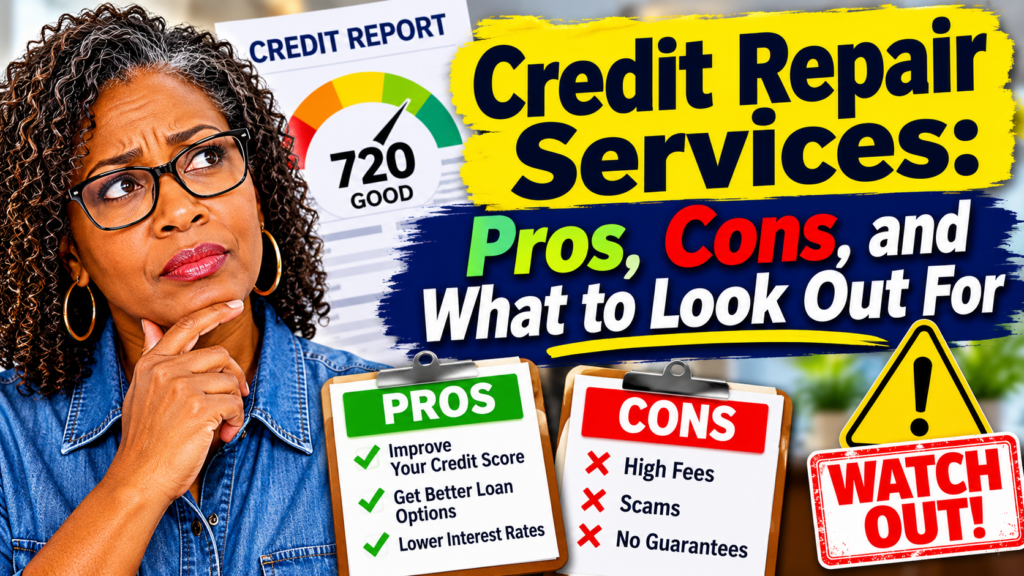
The Potential Pros of a Credit Repair Service
Credit repair isn’t automatically a bad idea, especially where it’s legal and the company follows the rules. A legitimate service may offer:
- Time savings. Reviewing three reports, drafting disputes, and tracking responses takes time. Some people would rather pay someone to handle the paperwork.
- Organization. If you have several genuine errors across multiple reports, a service can keep the disputes, deadlines, and responses in one place.
- Familiarity with the process. An experienced company may know how to describe a dispute clearly and what supporting documents help.
- Contract protections. Because CROA requires a written contract and a cancellation right, you have more recourse with a compliant company than with an informal helper.
The key word is genuine. A service is most useful when there are real, documentable errors to correct and you’d rather not do the work yourself.
The Cons and Limitations
The drawbacks are significant, and it’s worth weighing them honestly:
- It costs money for something you can do free. Disputing errors with credit reporting companies doesn’t cost anything, and the FTC publishes sample dispute letters.
- It can’t remove accurate information. If the late payments, collections, or charge-offs on your report are accurate and current, no company can legally make them disappear. Paying to dispute them is likely to waste money.
- Results aren’t guaranteed. Even a legitimate dispute may be verified and left unchanged. Any company that guarantees a specific score increase is a red flag.
- Mass disputes can backfire. Disputes that don’t identify what’s actually wrong may be treated as frivolous, and the reporting company can decline to investigate them.
- You’ll share sensitive information. A service typically needs your Social Security number, reports, and account details, which is a real risk if the company isn’t legitimate.
- It doesn’t address the underlying debt. Removing or correcting a report entry doesn’t cancel a debt you owe, and it won’t stop a collector or a lawsuit.
If your concern involves a collection notice rather than a reporting error, read our Debt & Collections guide, because the process is different.
Warning Signs of a Credit Repair Scam
The FTC lists several signs that a credit repair offer may be a scam. Walk away if a company:
- Requires payment before providing any help.
- Tells you not to contact the credit reporting companies yourself.
- Tells you to dispute information you know is accurate.
- Tells you to lie on a credit or loan application.
- Suggests filing a false identity theft report to get items removed.
- Doesn’t explain your legal rights when describing its services.
- Promises a “new credit identity” or a guaranteed score.
Filing a false identity theft report or misrepresenting information can create serious legal problems for you, not just the company. For more red flags and how to report them, see Credit-Repair Scams: Warning Signs for Georgia Consumers.
Questions to Ask Before You Sign
If you’re still considering a credit repair service, these questions can help you judge it:
- Is this company allowed to offer credit repair in my state?
- Will I get a written contract before paying, and does it list the services, total cost, timeline, and my right to cancel?
- When will I be charged, and is any payment requested before work is done?
- Which specific items do you plan to dispute, and why do you believe they’re inaccurate?
- What will you do that I couldn’t do myself for free?
- How will you protect my Social Security number and account information?
- Has the company had complaints with my state attorney general or the FTC?
A trustworthy company should be able to answer each of these clearly and in writing.
Free Alternatives Worth Trying First
Before paying anyone, consider doing the core steps yourself:
- Get your reports. You can check your Equifax, Experian, and TransUnion reports free every week at AnnualCreditReport.com. Our Credit Reports guide explains how to get and read them.
- Dispute errors yourself. Write to the credit reporting company and the business that reported the information. Our Disputes & Errors guide explains what counts as an error and what to gather first.
- Deal with identity theft directly. If accounts aren’t yours, IdentityTheft.gov offers a free recovery plan. Our identity theft recovery guide explains fraud alerts, freezes, and blocking.
- Consider nonprofit credit counseling. If your bigger problem is debt rather than errors, nonprofit counseling may be available through credit unions, universities, military financial programs, and Cooperative Extension offices. Reputable counselors review your whole situation and don’t ask for large upfront payments.
Over time, the steps that most influence credit are the ordinary ones: paying bills on time, paying down balances, and avoiding unnecessary new debt. No service can substitute for that history.
Where to Report a Problem
If you think a credit repair company has misled or defrauded you, you can report it to the FTC at ReportFraud.ftc.gov and to your state attorney general. In Georgia, contact the Attorney General’s Consumer Protection Division at (404) 651-8600, or (800) 869-1123 toll-free in Georgia.
The Bottom Line
A credit repair service can save time when you have genuine errors and would rather not handle the paperwork, but it can’t do anything you aren’t legally able to do yourself, and it can’t remove accurate information. Know your rights, check your state’s rules, never pay upfront, and walk away from guarantees. In many cases, the most effective first step is free: get your reports, look for real errors, and dispute them directly.
Contact Us
We would love to hear from you! Please fill out this form and we will get in touch with you shortly.