
Texas Consumer Credit Rights and Where to Get Help
If you live in Texas and you are dealing with bad credit, a loan you can’t keep up with, or a debt collector who won’t stop calling, you have more rights than you might think. You also have a state agency on your side. This guide explains who that agency is, how to check a company before you trust it, and what you can do on your own for free.
Contact Us
We would love to hear from you! Please fill out this form and we will get in touch with you shortly.
What Is the Texas Office of Consumer Credit Commissioner (OCCC)?
The Office of Consumer Credit Commissioner, or OCCC, is the Texas state agency that oversees lenders and credit companies that are not banks. Its job has two parts: keep those businesses following the law, and teach Texans how credit works.
The Austin OCCC office is in the Finance Commission Building at 2601 N. Lamar Blvd., Austin, TX 78705. Its main number is 512-936-7600, and its website is occc.texas.gov. You don’t need to live in Austin to use it. The OCCC helps consumers all over Texas.
Who the OCCC licenses and regulates
The OCCC oversees many of the businesses people with credit problems deal with most, including:
- Regulated lenders (installment and personal loan companies)
- Car dealers and companies that finance car purchases
- Pawnshops
- Credit access businesses, which arrange payday loans and auto title loans
- Debt management and debt settlement providers
- Property tax lenders
- Refund anticipation loan facilitators
- Registered creditors who sell goods or services on credit
- Residential mortgage loan originators
If a company on this list treats you unfairly, the OCCC is usually the right place to turn.
How to Check a Lender or Debt Company in Texas
Before you sign anything or pay any fee, take five minutes to check the company.
Step 1: Search the OCCC licensee database
The OCCC website has a Licensee Search tool. You can look a business up by name. The OCCC suggests also searching by city and part of the street address, because some businesses operate under a different name than the one on their sign. If you find the company, write down its license number.
Step 2: If you can’t find it, ask
Call the OCCC Consumer Helpline at 800-538-1579, Monday through Friday, 8 a.m. to 5 p.m. A staff member can tell you whether the business is licensed and whether the OCCC is the right agency for your problem.
How to file a complaint with the OCCC
- Contact the business first. Explain the problem in writing and keep a copy. Many issues get fixed at this step.
- Gather your papers. Collect your contract, receipts, account statements, letters, and notes from phone calls with dates and names.
- File online or by phone. Use the complaint form on occc.texas.gov, call 800-538-1579, or email consumer.complaints@occc.texas.gov. Include the license number if you have it.
- Follow up. The OCCC assigns your complaint to a staff member, who checks whether it falls under the agency’s authority and then contacts the business.
One thing to know: your complaint may become public record under the Texas Public Information Act. Personal details like your Social Security number are blacked out.
Texas Credit Repair Laws: Credit Services Organizations
In Texas, a company that offers to improve your credit for a fee is called a credit services organization (CSO). These companies are covered by Texas Finance Code Chapter 393.
The key rules for consumers:
- They must register before doing business. Section 393.101 says a credit services organization must register with the Texas Secretary of State before it does business in Texas.
- They can’t advertise without registering. Chapter 393 also bars a CSO from advertising its services unless it has filed its registration statement.
- Upfront fees require a bond. Under the law, a CSO generally may not charge you before it finishes all the promised work unless it has posted a surety bond or opened a surety account with the state. That money exists to repay people the company harms.
- Federal law adds protections. The federal Credit Repair Organizations Act also limits upfront fees and requires a written contract that explains your right to cancel.
Credit repair is different from payday and title lending. Note that “CSO” is also used for some payday and title loan arrangers, but those businesses are credit access businesses, and they need a license from the OCCC, not just a Secretary of State registration.
How to verify a credit repair company
- Visit the Texas Secretary of State’s credit services organization page and confirm the company is registered.
- Ask the company for its registration number and its bond information. A legitimate company will give them to you.
- For payday or title loan companies, use the OCCC Licensee Search instead.
- Search the company name plus “complaints” and check the CFPB complaint database.
Red Flags of a Credit Repair Scam
Walk away if a company does any of these things:
- Guarantees results. No one can promise to raise your score by a set number of points or remove accurate information.
- Demands large fees up front without showing proof of a bond or surety account.
- Tells you to hide accurate information or to create a “new” credit identity using a different number. That can be a crime.
- Won’t give you a written contract, or rushes you to sign before you read it.
- Tells you not to contact the credit bureaus yourself. You always have the right to do so.
- Can’t show its Texas registration.
Texas Debt Collection Rights
Texas has its own debt collection law, Texas Finance Code Chapter 392, often called the Texas Debt Collection Act. It applies to many collectors, including some original creditors. Third-party debt collectors must also have a surety bond on file before they collect in Texas.
Under Chapter 392, a debt collector generally may not:
- Threaten violence, or threaten to have you arrested without a proper court process
- Threaten to take your property without going to court when the law requires it
- Use profane or abusive language, or call over and over to harass you
- Lie about who they are, how much you owe, or what will happen if you don’t pay
- Use unfair tactics, like adding fees the law doesn’t allow
If a debt buyer tries to collect a debt that is too old to sue on, Texas law also requires a specific written notice telling you so.
The federal Fair Debt Collection Practices Act
The federal Fair Debt Collection Practices Act (FDCPA) works alongside Texas law. It gives you the right to ask a collector to prove the debt, to tell them in writing to stop contacting you, and to sue if they break the rules. Read more on our Fair Debt Collection Practices page.
Where to complain about a debt collector
- Collector working for an OCCC-licensed lender: OCCC Consumer Helpline, 800-538-1579.
- Third-party debt collector or collection agency: Texas Attorney General Consumer Protection Helpline, 800-621-0508.
- Any collector: the federal Consumer Financial Protection Bureau at consumerfinance.gov/complaint.
The OCCC’s debt collection practices page has more detail.
What You Can Do Yourself for Free
Many things credit repair companies charge for, you can do yourself at no cost.
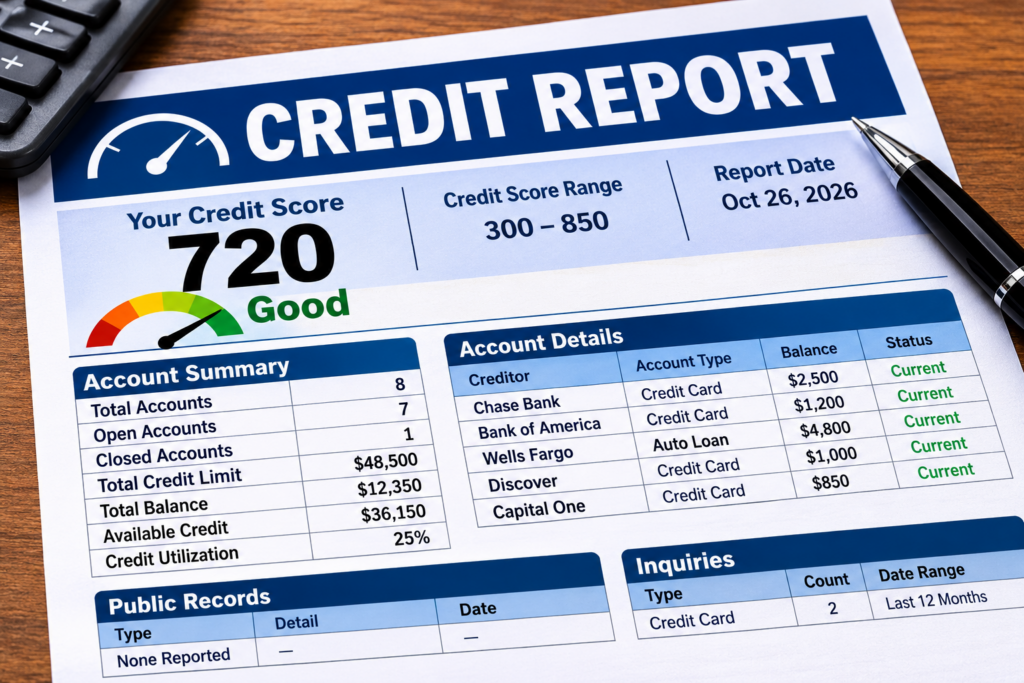
Get your free credit reports
Go to AnnualCreditReport.com, the official site for free reports from Equifax, Experian, and TransUnion. Check all three, because they don’t always match. See our free credit report guide for step-by-step help.
Dispute errors under the Fair Credit Reporting Act
The federal Fair Credit Reporting Act (FCRA) lets you dispute information that is wrong or incomplete. Send your dispute to the credit bureau and to the company that reported the item. Explain the error, include copies (never originals) of your proof, and keep records. The bureau generally must investigate, usually within 30 days, and fix or remove anything it can’t verify.
Build credit the right way
- Pay every bill on time. Payment history is the biggest factor in most scores.
- Keep credit card balances low compared to your limits.
- Consider a secured credit card or a credit-builder loan from a bank or credit union.
- Don’t open lots of new accounts at once.
Learn how scores are calculated on our credit score page.
Frequently Asked Questions
Who regulates payday and title loans in Texas?
The OCCC. Businesses that arrange payday and auto title loans are credit access businesses, and they need an OCCC license.
Do credit repair companies have to be registered in Texas?
Yes, unless the law exempts them. Texas Finance Code Chapter 393 requires credit services organizations to register with the Texas Secretary of State before doing business or advertising.
How do I file a complaint with the Texas OCCC?
File online at occc.texas.gov, call the Consumer Helpline at 800-538-1579, or email consumer.complaints@occc.texas.gov.
Where is the OCCC located?
The OCCC is in Austin at 2601 N. Lamar Blvd., Austin, TX 78705. It serves consumers across Texas, and most help is available by phone or online.
Can a Texas debt collector call me at work?
Under the federal FDCPA, a collector generally must stop calling you at work if they know your employer doesn’t allow it. Tell them in writing to be safe.
Can a credit repair company remove accurate negative information?
No. Accurate, current information can stay on your report for the time the law allows. Only wrong, incomplete, or unverifiable items can be removed.
Is it legal for a credit repair company to charge upfront in Texas?
Only in limited cases. Texas law generally requires a bond or surety account before a CSO can charge before finishing its work, and federal law adds its own limits. Check the current statute before you pay.
Where do I report a third-party debt collector in Texas?
Call the Texas Attorney General’s Consumer Protection Helpline at 800-621-0508 or file a complaint with the CFPB.
Helpful Resources
- Texas Office of Consumer Credit Commissioner (OCCC): licensee search, complaints, consumer education
- Texas Secretary of State: Credit Services Organizations: registration rules and lookup
- Texas Attorney General Consumer Protection: third-party debt collector complaints
- Consumer Financial Protection Bureau (CFPB): federal complaints and guides
- AnnualCreditReport.com: free credit reports
- Texas Finance Code Chapter 393 and Chapter 392: the full statutes
Getting started is easy
Fill out the quick form and we’ll get back to you with clear next steps and resources to help repair bad credit.
"*" indicates required fields
No obligation. Just an honest answer from Repair Bad Credit. Prefer to talk? Call (404) 913-7086.